

 See My Latest Article on HelloNation
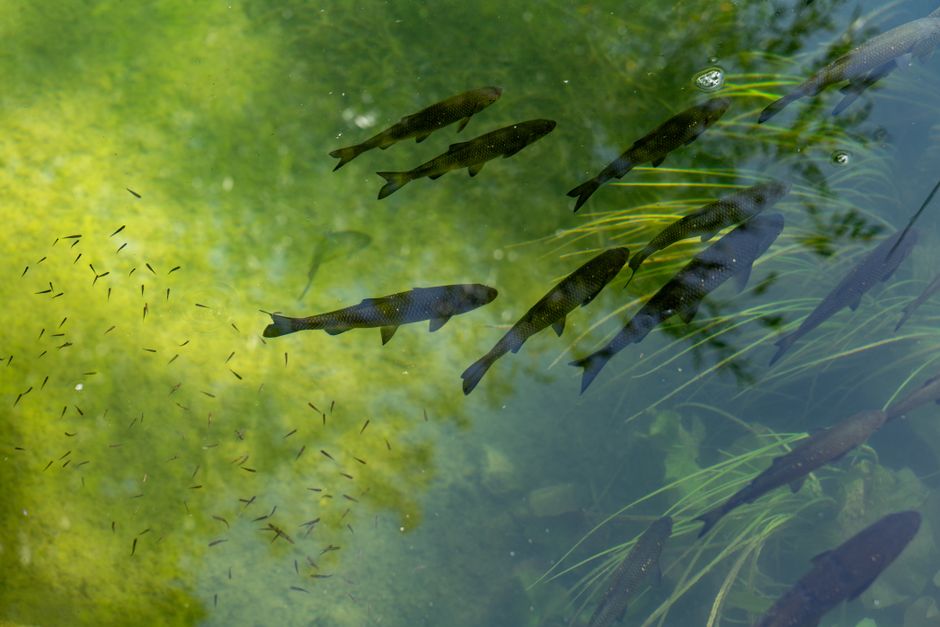
Can stocked fish control algae in a pond?
Stocked fish may influence algae levels, but they rarely solve an algae problem by themselves. Fish affect the pond food web, nutrient movement, water clarity, and aquatic vegetation. The result depends on the species, stocking rate, pond depth, shoreline condition, and amount of nutrient entering the water.
A green surface, floating mats, or cloudy water usually indicates that the pond has excess nutrients, favorable temperatures, or too much sunlight. Common nutrient sources include lawn fertilizer, eroded soil, leaves, grass clippings, waterfowl waste, and runoff from surrounding yards or paved areas.
Adding fish without addressing those conditions can produce little improvement and may sometimes make the problem worse.
Which stocked fish have the greatest effect on algae?
The fish most often associated with algae control are not all working in the same way.
Herbivorous fish
Grass carp primarily eat aquatic plants such as submerged weeds and some soft vegetation. They are not a dependable treatment for microscopic algae, including planktonic algae that turns water green or pea-colored.
In New York, only triploid grass carp are legal for approved stocking, and their use is regulated. They may be considered for certain ponds where excessive aquatic plants significantly interfere with the intended use of the water. They should not be added casually, and they are not a general-purpose solution for every type of algae.
Predator fish
Largemouth bass and other predator fish can reduce populations of smaller fish that feed heavily on zooplankton. Zooplankton are tiny animals that consume algae. In theory, fewer zooplankton-eating fish can allow larger zooplankton populations to develop, which may increase grazing on algae.
This food-web effect is sometimes called biomanipulation. It can work under carefully managed conditions, but the outcome is difficult to predict in a small private pond. Predator stocking can also alter the entire fish community, reduce desirable forage fish, or create an imbalance that is difficult to reverse.
Forage fish
Bluegill, fathead minnows, and similar forage fish are commonly used to support predator populations or provide fishing opportunities. They are not direct algae-control fish. In some ponds, large numbers of small fish may increase pressure on zooplankton and indirectly contribute to algae persistence.
Stocking forage fish simply because a pond looks green is unlikely to correct the underlying issue.
Why can fish sometimes make algae worse?
Fish release nutrients through waste, and bottom-feeding or actively feeding fish can stir sediment. That disturbance may return phosphorus to the water, where algae can use it.
A pond with too many fish may also have reduced zooplankton grazing. Small fish that consume zooplankton remove an important natural check on algae. If the pond already receives substantial nutrient runoff, additional fish can increase the nutrient load.
This does not mean fish are harmful in every pond. It means stocking must be considered as part of the pond’s complete ecological system rather than as an isolated algae treatment.
Does stocking fish clear green water?
Usually, no. Green water is commonly caused by suspended microscopic algae. Fish may affect that algae indirectly, but the response is often slow, inconsistent, or temporary.
Water clarity may improve more reliably when nutrient inputs are reduced. Useful measures include:
- Keeping fertilizer away from the shoreline and following application instructions carefully.
- Maintaining a vegetated buffer along the pond edge.
- Stabilizing bare soil and drainage channels.
- Removing grass clippings, leaves, and other organic debris from the water.
- Limiting runoff from roofs, driveways, and compacted ground.
- Avoiding excessive feeding of fish and waterfowl.
- Managing dense populations of geese and other waterfowl without creating new wildlife problems.
In Albany, seasonal runoff can be especially significant during spring snowmelt and heavy summer storms. Nutrients that accumulate around a property during the colder months may enter a pond rapidly when the ground thaws or rainfall overwhelms drainage areas.
What about filamentous algae or floating mats?
Filamentous algae forms stringy green mats that may collect along shorelines or rise to the surface. Stocked fish usually provide limited control of this type of algae.
The more useful questions are how much sunlight reaches the pond, whether nutrients are entering from the watershed, and whether the pond is shallow enough for bottom sediments to remain warm and oxygenated. Dense mats can also develop after aquatic plants die back and release stored nutrients.
Removing a limited amount of algae by hand may provide temporary relief, but it does not correct the cause. Repeated severe blooms suggest that the pond needs a broader assessment of water movement, depth, sediment, shoreline vegetation, and nutrient sources.
Is grass carp the same as algae-eating fish?
No. Grass carp are mainly used to control certain aquatic plants, not to consume the microscopic algae responsible for green water. They may reduce plant cover in a pond, but removing too much vegetation can create other problems.
Aquatic plants provide habitat, shade, oxygen production during daylight, and surfaces for small aquatic organisms. If most plants are removed, sunlight may reach more of the water column, and algae may gain an advantage. Decaying plant material can also add nutrients.
New York requires authorization before grass carp are possessed or stocked. Triploid grass carp are the only form of grass carp legal for approved use in the state. Pond owners should verify current requirements before considering them.
What should pond owners check before stocking?
Before adding fish, identify the type and severity of the algae problem. Useful observations include:
- Whether the water is green throughout or covered by surface mats.
- Whether algae appears after rain, hot weather, or fertilizer use.
- Pond depth and areas that become very shallow during summer.
- Fish species already present.
- Signs of fish stress, including gasping near the surface.
- Amount of leaf litter, sediment, and decaying vegetation.
- Presence of inflowing ditches, drainage pipes, or eroding banks.
- Whether the pond connects to a stream, wetland, or other water body.
A basic water test for nutrients, especially phosphorus and nitrogen, can provide more useful information than guessing from water color alone. Dissolved oxygen can also become a concern during prolonged cloudy weather, heavy algae die-off, or winter ice cover.
Are permits required to stock a private pond in Albany?
Yes. New York requires a fish stocking permit before fish or fish eggs are placed in state waters, including privately owned ponds. The requirement helps prevent disease transmission, unsuitable species introductions, and ecological problems.
Fish should come from an appropriate, certified source, and pond owners should not move fish from one water body to another. Releasing live bait is also unsafe because it can spread fish diseases and introduce species that were not part of the pond’s original community.
A pond that is connected to a stream, located near regulated wetlands, or used for a particular agricultural or recreational purpose may involve additional requirements. Regulatory details can change, so current guidance from the New York State Department of Environmental Conservation should be checked before stocking.
What is the most practical approach?
Stocked fish are best viewed as one possible part of a long-term pond management plan, not as an algae remover. The most dependable sequence is to identify the algae type, reduce outside nutrient sources, protect the shoreline, evaluate existing fish populations, and then determine whether stocking supports the pond’s actual goals.
For many household ponds, improving drainage and shoreline conditions will have more lasting value than adding fish. Stocking may be appropriate for fisheries management, but algae control should be based on the pond’s ecology, legal requirements, and water-quality conditions rather than on species names alone.